Posts

Showing posts from January, 2026

Colorectal Cancer Now a Leading Cause of Cancer Death in Adults Under 50 — New Research, Emerging Insights, and the Debate Over Repurposed Drugs (2026)

Image
Colorectal cancer — once considered a disease of older adults — is now the number one cause of cancer-related death in Americans under age 50 , according to new research published in the Journal of the American Medical Association (JAMA). This alarming shift marks a major public-health milestone and highlights the urgent need for better awareness, early screening, and research into causes.  A Dramatic Shift in Cancer Mortality Trends Until recently, cancers like lung, breast, and leukemia were the top killers for people under 50. But a new analysis of U.S. cancer mortality data from 1990 through 2023 shows that colorectal cancer (CRC) mortality has increased by about 1.1% per year , even as deaths from most major cancers have declined. By 2023, colorectal cancer had risen from the fifth leading cause of cancer death in younger adults to the first . ( American Hospital Association ) Key Trend Drivers Decreases in death rates for other cancers (lung, breast, leukemia, brain). ...

Cancer Prevention 101 (2026): Diet, Lifestyle, Screening & Supplements

Image
Abstract Cancer remains a leading global cause of death, with incidence and mortality rates expected to rise in coming decades. While therapeutic advances have led to incremental survival gains, the most impactful strategy is prevention through modifiable risk factors. This article synthesizes current high-quality evidence and major guideline recommendations on diet, lifestyle, screenings, environmental exposures, and supplements to optimize cancer prevention strategies for clinicians, writers, and health-minded readers. 1. Introduction Despite trillions spent on cancer research  (The Lancet), cancer still kills around 10 million people a year  (WHO) and is a leading cause of death globally. The incidence of common cancers such as breast, lung, and colon cancer is expected to increase by over 75% between 2022 and 2050.   Credit:  Statista Ladanie et al (JAMA 2020) showed that over the past fifteen years, new therapies have led to an overall survival improvement of...

Fact Check: Can Ivermectin and Fenbendazole Help Treat Cancer?

Image
Ivermectin and fenbendazole, originally developed as antiparasitic drugs, are sparking hope in the fight against cancer, fueled by inspiring stories like those shared by actor  Mel Gibson on The Joe Rogan Experience , where he celebrated friends’ remarkable recoveries. While these medications aren’t yet standard cancer treatments, early research is uncovering exciting potential. Scientists are encouraged by promising lab studies and are calling for more clinical trials to confirm their effectiveness and ensure safe use in humans, paving the way for innovative, accessible therapies that could transform lives. Introduction and Context According to a January 22, 2025 fact-check article by AFP: "The anti-parasitic drugs ivermectin and fenbendazole are not currently recommended for cancer, but posts spread across social media touting the medications after actor  Mel Gibson claimed on the Joe Rogan Experience  that they cured his friends' cases of the disease. Oncology ex...

Lifestyle as an Adjunct to Immunotherapy: What the Evidence Really Shows (2026)

Image
Key message: Lifestyle interventions do not replace immunotherapy — but they can meaningfully influence who responds, how well, and how long responses last by shaping metabolism, inflammation, and immune fitness. Why Lifestyle Matters in the Era of Immunotherapy Immune checkpoint inhibitors (PD-1, PD-L1, CTLA-4) have transformed cancer care, yet: Only 20–40% of patients achieve durable responses Many experience immune-related adverse events Metabolic and inflammatory status strongly influence outcomes Lifestyle factors act upstream of the immune system, affecting T-cell energetics, cytokine balance, gut microbiota, and systemic inflammation — all critical to immunotherapy success. Metabolic Health: The Primary Modifier of Immune Response Insulin Resistance and Hyperglycemia Poor glycemic control is associated with: Impaired T-cell activation Increased regulatory T-cell dominance Reduced response rates to checkpoint inhibitors Conversely, improved insulin sensitivity supports: CD8+ T-...

Diet, Lifestyle, and Cancer Prevention: What the Science Really Shows (2026 Update)

Image
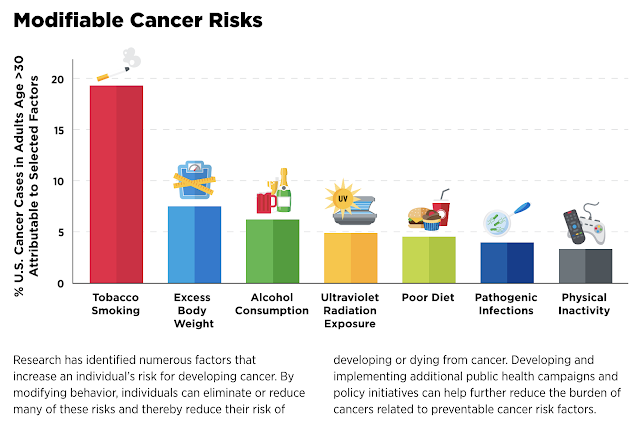
Diet and lifestyle matter for risk reduction and treatment resilience , but they are not standalone cancer therapies. Modern evidence points to metabolism, inflammation, and immune function as the real intermediaries between lifestyle and cancer outcomes. Since this article was first published in 2025, cancer research has moved decisively beyond simplistic claims like “food cures cancer” or “lifestyle alone prevents malignancy.” Large cohort studies, metabolic research, and clinical oncology data now paint a more nuanced picture: Diet influences metabolic signaling , not tumors directly Lifestyle changes lower cancer incidence risk , but rarely eliminate it Outcomes improve most when lifestyle is combined with evidence-based therapy This update reflects current consensus while addressing persistent myths. AACR Cancer Progress Report 2023 / 2024 Diet and Cancer: Association vs Causation What Diet Can Do Strong evidence shows that diet affects: Obesity and insulin resistance Chronic...

Pancreatic Cancer Supplements, Metabolic Therapy & the Bigelsen Protocol (2026 Update)

Image
Introduction Pancreatic cancer is one of the most aggressive cancers, with complex nutritional and treatment needs. While  surgery, chemotherapy, and targeted therapies remain the standard of care , research increasingly explores  supplemental, metabolic, and repurposed-drug strategies  to support digestion, reduce inflammation, and modulate tumor metabolism. This guide combines  evidence-based supplements, selenium research, metabolic therapy approaches, and the Bigelsen protocol  for an up-to-date, integrative perspective. 1. Pancreatic Enzyme Replacement Therapy (PERT) Pancreatic exocrine insufficiency (PEI) is common in pancreatic cancer, leading to poor digestion, malnutrition, and weight loss. Key Points: PERT helps digest fats, proteins, and carbohydrates . Crucial after surgeries like the Whipple procedure . Prescription options (Creon, Pancreaze) are recommended; over-the-counter enzymes vary in potency. Dosing should be guided by a healthcare professio...

Repurposed Antiparasitic Agents and Integrative Interventions in Advanced Prostate Cancer Following Standard Therapy Failure: A Critical Review (2026)

Image
Abstract Background: Metastatic castration‑resistant prostate cancer (mCRPC) remains incurable despite modern multimodal therapy including androgen deprivation therapy (ADT) and PSMA‑targeted radioligand therapy. Repurposed antiparasitic agents such as ivermectin, mebendazole, and fenbendazole have attracted interest for potential anticancer effects based on preclinical mechanisms and anecdotal clinical reports. Additionally, an in silico simulated randomized trial has proposed a comprehensive multimodal integrative regimen combining repurposed drugs with diet, supplements, and conventional therapy. Methods: This narrative review synthesizes clinical evidence for standard therapies in advanced prostate cancer and evaluates the available preclinical literature on repurposed antiparasitics. It also integrates data from large case report compilations and in silico simulations to illustrate the current landscape and highlight critical limitations. Results: ADT and ^177Lu‑PSMA‑617 radiol...